

Tamworth
Breed page
Tamworth
The Tamworth's red-gold hair marks it as one of the most recognisable of the traditional pig breeds.
Today's Tamworth is thought to be the most typical breed descended from the old indigenous species, the Old English Forest pig. The sows are excellent mothers, being milky, docile as well as protective.
As with all traditional breeds, the Tamworth is hardy and can be kept in environments ranging from rough pasture to meadowland. Of all the native breeds it is particularly resistant to sunburn.
Read on to learn more about keeping this breed, the BPA's conservation efforts and much more!

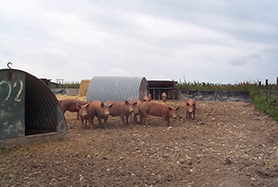
Buyers Guide
Tamworth is an attractive and productive Midlands breed; one that can still trace its ancestry back to the old English forest pig.
Learn more
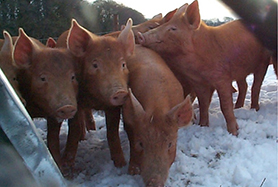
Me and My Pigs
Jamie Emberson at peace with his life, his herd of Tamworths and his exciting; pork-related plans for the future, he set out to provide the family with meat that they could eat with confidence.
Learn more
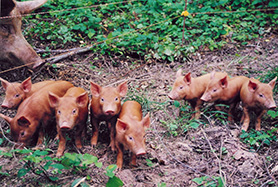
Conservation
The Tamworth numbers have seen little change in numbers since the year before but we there are still some lines that need to be focused on for both the male and female bloodlines.
Learn more

Breed Standard
Thinking about buying a Tamworth? Find out more about the essential characteristics that define the breed.
Learn more
Breed History
It is now thought to be the oldest pure English breed and, as a result, it is also sometimes crossed with wild boar to produce distinctive gamey pork.
After World War II, breeding stock numbers fell dramatically - to a point during the 1970's when there were only 17 surviving boars.
During the 20th Century Tamworths were both exported and imported; an exercise vitally important to a breed with small numbers and potential inbreeding problems.
In the 70s and 90s boars were imported from Australia - which had previously imported the breed from Britain - to ensure the breed's survival.

The British Pig Association (BPA) exists to conserve our rare breed pigs, promote our pedigree breeds and ensure breed longevity.