

Mangalitza
Breed page
Mangalitza
The most eye-catching of breeds has plenty else to offer
Once renowned as a Lard Pig capable of producing 70 litres of rendered fat, the Mangalitza has carved out new niche markets in forestry projects and the production of special hams and salamis. The breed was featured at the Salone Del Gusto in Turin in 2004.
The meat is well marbled so that it is tastier and less dry than that from more modern breeds. The fat is also special as it has a higher level of monounsaturated fats, meaning it goes rancid less easily which is good for long curing. It also has a healthier balance of Omega 3 to Omega 6 fatty acids than seed oils which have become so popular in modern cookery.


Buyers Guide
The Mangalitza is quite different to other breeds with its woolly looking coat. It is traditionally found in Austria, Germany, Hungary, Romania and Switzerland. This was a breed on the brink of distinction but has seen a revival in recent years.
Learn more
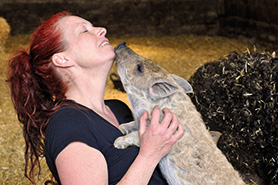
Me and my pigs
Lisa Hodgson from beautiful North Yorkshire has a herd of flourishing Otterburn Mangalitzas after first seeing them at Beamish Open Air Museum and became intrigued by the breed.
Learn more
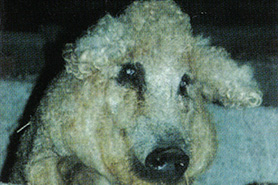
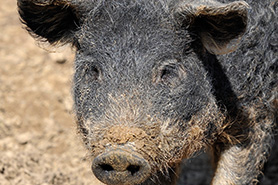
Breed Standard
Thinking about buying a Mangalitza? Find out more about the essential characteristics that define the breed.
Learn more
Breed History
The whole Mangalitza breed was almost lost with the total population world-wide down to less than 150 sows in 1993.
Thanks to the work of a small group of dedicated breeders, the Mangalitza has been brought back from the verge of extinction. It is now farmed on large units in Hungary and has been exported to North America as well as the UK.
Imported into the UK in 2006, there are 7 female lines and 3 boar lines established. There are three distinct types within the breed : the Blonde, the Red and the unique Swallow Bellied with its white underline.
All three types are very hardy. The Swallow bellied Mangalitza was developed in the 1800’s from crossing the Blonde with the Black Mangalitza.

The British Pig Association (BPA) exists to conserve our rare breed pigs, promote our pedigree breeds and ensure breed longevity.