

Gloucestershire Old Spots
Breed page
Gloucestershire Old Spots
The Gloucestershire Old Spot is going from strength to strength as a breed.
The Gloucestershire Old Spot are a hardy breed and live quite happily outside. Whilst they must have one clear spot there are no set numbers of spots and people have mixed views on how many they like with some opting for lots of spots whilst others for very few.
They have become very popular and have the highest number of the native breeds of pig.
Read on to learn more about keeping this breed, the BPA's conservation efforts and much more!


Buyers Guide
One of the most popular native breeds, these docile, hardy and good nurturing pigs have many positives especially for the first time buyer.
Learn more

Me and My Pigs
Ex-lawyer-turned-pedigree pork producer, Deborah Blackmore, has probably never been busier than she is now but, she wouldn't change a thing.
Learn more

Conservation
Gloucestershire Old Spots unlike many of the native breeds have large numbers and many lines are well represented, the challenge with this breed is ensuring the geographical distribution of the different bloodlines.
Learn more
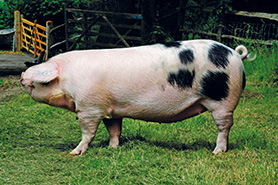
Breed Standard
Thinking about buying a Gloucestershire Old Spot? Find out more about the essential characteristics that define the breed.
Learn more
Breed History
The Gloucestershire Old Spot can only be dated to the early 20th century.
Whilst there are many old paintings of spotted pigs it is not clear what these pigs were and if they were any relation to the Gloucestershire Old Spots of today.
They were known as the Orchard Pig in the Berkley vale of Gloucestershire based on the fact, they lived quite happily outside amongst the orchards eaten the fallen apples.
From being a very small breed some 40 years ago, it is now the largest numerically of the pig breeds listed by The Rare Breeds Survival Trust.

The British Pig Association (BPA) exists to conserve our rare breed pigs, promote our pedigree breeds and ensure breed longevity.